Showing posts with label Business Environment.. Show all posts

Tuesday, March 8, 2022

Ningbo-Zhoushan Port ranks 3rd for container throughput

 宁波舟山港2.jpg

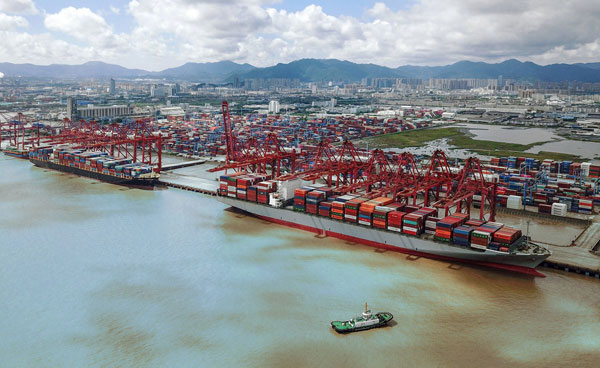
Container ships pictured in the Beilun No.2 terminal of the Ningbo-Zhoushan Port in Ningbo, East China's Zhejiang province on July 16, 2018 [Photo/IC]

Alphaliner, a shipping advisory service, recently released its annual "Top 120 Ports Worldwide in Container Throughput in 2018" list. 

Ningbo-Zhoushan Port is now listed third in the world for container throughput, up from fourth a year earlier.

The port has managed to overtake Shenzhen by realizing an annual container throughput of more than 26.35 million twenty-foot equivalent units (TEUs), up 7 percent year on year, thanks to rapid growth in foreign trade during 2018.

The port handled around 21.63 million TEUs during January and November last year, up 8.2 percent from a year earlier.

In addition, it strengthened its ties with global shipping alliances such as 2M, OCEAN and THE in organizing shipping routes, and 246 routes were operated from the port by the end of 2018.

China's 10 major ports are all among the top 20 ports on the list.

The Port of Shanghai ranked first with an annual container throughput of 42.01 million TEUs –– the ninth consecutive year that the port has clinched the top position. 

In general, the top 20 ports witnessed a slowdown in their container throughput growth in 2018 due to weak global trade. A total of 340 million TEUs were handled during the year, up 3.8 percent year on year –– lower than last year's 5.6 percent.

Ningbo hotspot for top-tier professionals

 Ningbo in East China's Zhejiang province has emerged as a magnet for high-end professionals in recent years.

In 1999, the city established its first postdoctoral workstation - the Ningbo Postdoctoral Workstation of Zhejiang University - in cooperation with Zhejiang University. That figure has now climbed to 212, attracting a total of 1,063 postdocs, official data show.

The group of talent has 1,365 patents and has developed 138 new products above the municipal level. Their research results have generated over 10 billion yuan ($1.45 billion) in output value to date.

One such example is Xia Yin, general manager of the R&D department of Ningbo Exciton Technology Co Ltd.

Born in Cixi, a county-level city in Ningbo, Xia chose to work in his hometown after graduating from East China University of Science and Technology with a doctoral degree in 2014.

He landed his job at Exciton while attending a recruitment fair targeting high-end professionals during the Ningbo Talent, Science and Technology Week, an annual event held by the city.

This year, Xia's role has changed from an employee to an employer while attending the week-long recruitment event.

Over the past six years, Xia has applied for 70 to 80 patents, including more than 20 related to small-sized optical films.

Exciton, which specializes in the R&D of optical films, set up its postdoctoral workstation in 2013, which has since employed a total of nine postdocs.

To date, the postdoctoral program has helped the company generate an additional 280 million yuan in profit and create more than 200 jobs.

A head official at the Ningbo municipal bureau of human resources and social security revealed that more than 100 postdoctoral stations will be built by 2025, bringing the total number of postdoctoral stations in the city to more than 300.

Ningbo is home to 39 enterprises with the highest market shares in their niche markets in China and special efforts will be made to help the 14 enterprises without postdoctoral stations among them to set up one, he added.

Standardized gov't service window launched in Jiangbei


Standardized gov't service window launched in Jiangbei

The Chinese Academy of Social Sciences sets up a research organ dedicated to government services and openness in Ningbo's Jiangbei district on Oct 13. [Photo/ zj.zjol.com.cn]

A standardized government service window was launched in Ningbo's Jiangbei district on Oct 13, according to local media reports.

A total of 14 individual affairs and 9 enterprise affairs now can be handled at the window, with more to be added in the future.

In recent years, Jiangbei has been actively exploring how to provide integrated government services, with the aim of modernizing its governance capability and constructing a transparent and service-oriented government.

Public satisfaction towards administrative approval services in Jiangbei has topped Ningbo four years in a row, according to a third-party report.

It has also ranked among the top three county-level cities nationwide in terms of government transparency for three consecutive years.

The high-quality government services have fueled local social and economic development. Official data show the district’s GDP (gross domestic product) has ranked first in Ningbo four years in a row.

On the same day, the Chinese Academy of Social Sciences inaugurated a research organ in the district, which is designed to conduct research on government services and openness.


Ningbo ranks 12th in China for business climate: report

 Ningbo in East China's Zhejiang province ranked 12th in China in terms of business climate, a recent report said.

In addion to Ningbo, the cities including Beijing, Shenzhen, Guangzhou, Shanghai, Hangzhou, Xiamen, Nanjing and Wuhan also made the top 15 model city list, according to the China Business Climate Report 2020.

The report, the first national report on business climate, evaluated cities in 31 provinces and regions across China.

Ningbo's innovative measures in such fields as protecting small and medium-sized investors, taxation, administrative services and government procurement were included in the report.

In recent years, Ningbo has been making diligent efforts to build a congenial law-based business climate in line with international standards.

Administrative service procedures have been greatly streamlined.

For instance, the approval time for construction projects in the city has been shortened to less than 70 workdays, while the time required for enterprise investment projects has been slashed to a maximum of 47 workdays, down from the original 172. The 105 items that enterprises previously had to declare to import goods have been reduced to just nine.

The optimized business climate has stimulated the local market. Official data show more than 180,000 market entities were established in Ningbo in 2019, an increase of 6.8 percent year-on-year.

The local authorities plan to further deepen systemic reform and promote the application of internet technologies in administrative services, creating a stable, fair, transparent and predictable environment for all types of market entities.


Sino-France garden breaks ground in Ningbo


Sino-France garden breaks ground in Ningbo

A rendering of the Sino-France Friendship Garden in Ningbo, East China's Zhejiang province. [Photo/cnnb.com.cn]

The Sino-France Friendship Garden, jointly funded by Ningbo and Rouen, France, broke ground in Ningbo, Zhejiang province on Oct 12, according to local media reports.

This year marks the 30th anniversary of the establishment of sisterhood relations between Ningbo and Rouen. The garden comes as part of efforts by the two cities to cement bilateral ties.

Rouen is a city on the River Seine in northern France and the capital of the region of Normandy. Over the past 30 years, Ningbo and Rouen have cooperated closely in terms of economy, trade, culture, education, health care and city management.

Rouen was honored as an outstanding city for its exchange and cooperation with China by the Chinese People's Association for Friendship with Foreign Countries.

Situated in Ningbo's Eastern New City, the garden, the first to be co-built by Ningbo and a foreign city, will be built in a traditional French style, showcasing Rouen's history, culture and natural scenery.

It is set to occupy 7,650 square meters and is expected to finish construction by the end of this year.

Meanwhile, a Chinese-style garden will also be built in Rouen. Located on Pasteur Avenue on the right bank of the River Seine, the garden will be built using traditional Chinese gardening techniques and will highlight Ningbo culture.


Ningbo ranks fifth nationwide in intelligent manufacturing

 Ningbo in East China's Zhejiang province ranked fifth nationwide in terms of intelligent manufacturing capacity, after Shenzhen, Shanghai, Beijing and Hefei, according to a recent report.

The 2019 China Intelligent Manufacturing Index (CIMI) Report is compiled by the 21 Century Industry Research Institute and is the first intelligent manufacturing index independently released by a domestic think tank.

Intelligent manufacturing refers to manufacturing using intelligent systems combining machines and human experts.

Intelligent manufacturing reduces the need for manual labor, according to the report.

Guangdong province led the nation in terms of the strength of its intelligent manufacturing, followed by Jiangsu, Beijing, Zhejiang, Shandong, Henan, Shanghai, Hubei, Fujian and Hunan.

CIMI included four indexes—policy environment, industrial environment, industrial development and green manufacturing.

Ningbo ranks high nationwide in 5G construction


Ningbo ranks high nationwide in 5G construction

Ningbo is now home to nearly 5,000 5G base stations, and that figure will increase to 7,000 by the end of this year, with signals covering all jurisdictions above the township level. [Photo/WeChat account: nbfb0574]

Ningbo in East China's Zhejiang province ranked fourth nationwide in terms of its 5G network construction, a recent report by China Mobile shows.

The report evaluated cities across the nation based on indicators such as network testing results, network infrastructure capacity, and city size.

Ningbo topped the country in terms of network testing, despite placing fourth overall, the report said.

In recent years, the city has ramped up construction on its 5G network infrastructure as a way to promote the integration of the digital and real economy and facilitate industrial transformation.

To date, it has constructed nearly 5,000 5G base stations and plans to increase that figure to 7,000 by the end of this year, with signals covering all jurisdictions above the township level.

Meanwhile, efforts have also been made to promote the industrial application of 5G technologies in a vast swath of sectors.

So far, the Ningbo branch of China Mobile has released more than 40 5G applications in sectors such as auto parts, energy and chemistry, textiles and garments, high-end equipment, intelligent home appliances and biomedicine.


Investing in Ningbo, Zhejiang China

 In this city profile, we highlight the reasons that make investing in Ningbo a feasible alternative for international companies looking to establish an operation in China. Ningbo offers opportunities in areas that optimize integration of manufacturing technology and information technology as well as in the expanding advanced manufacturing and modern service industries.
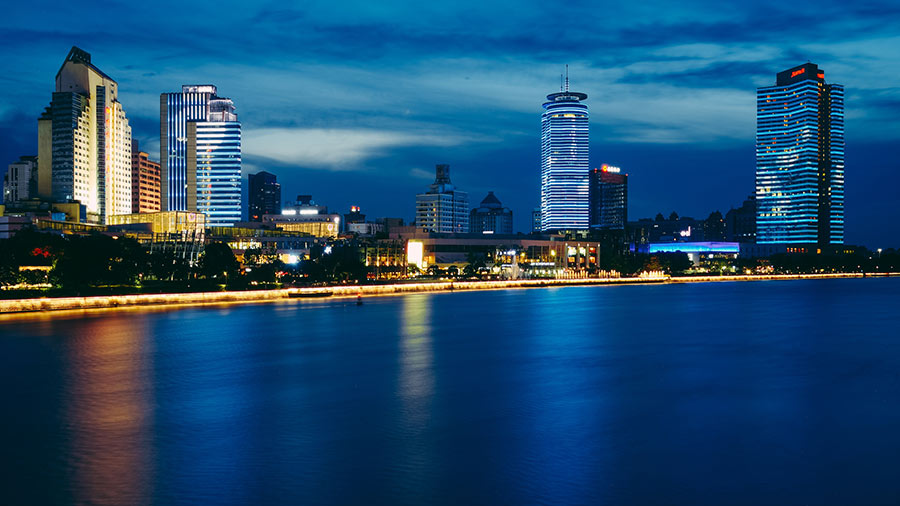
Investing in Ningbo

Why should you consider Ningbo?

Ningbo is a major sub-provincial city in the northeast of Zhejiang Province. As the southern economic center of the Yangtze River Delta, Ningbo has always been a city of historical and economic importance in international trade. With the world’s largest cargo throughput and the world’s third largest container volume, the Port of Ningbo-Zhoushan is a multi-functional, comprehensive, and modern deep-water port integrating inland, estuarine, and seaport.

As a city with advanced manufacturing industrial clusters and port-adjacent industrial clusters, Ningbo has profitable enterprises in green petrochemical, automobile manufacturing, and high-end equipment production, among others. The green petrochemical industry facilitates agglomeration of upstream and downstream industries in the large-scale refining-chemical integration base.

Ningbo has nine national development zones, five national demonstration bases of emerging industrial sectors, and many leading enterprises and single champion enterprises showcasing innovation. In August 2019, China’s General Administration of Customs magazine published the 2018 ranking of China’s Top 100 foreign trade cities, with Ningbo ranking eighth.

Given the continuous promotion of Ningbo’s industrial upgrades, foreign-funded enterprises can also invest in opportunities arising out of the city’s transformation of its traditional industries, such as in smart manufacturing, among other fields. The Ningbo Bureau of Commerce has said that to improve the regional business environment, Ningbo would open its economy further and provide more sustained and robust support for foreign investment.
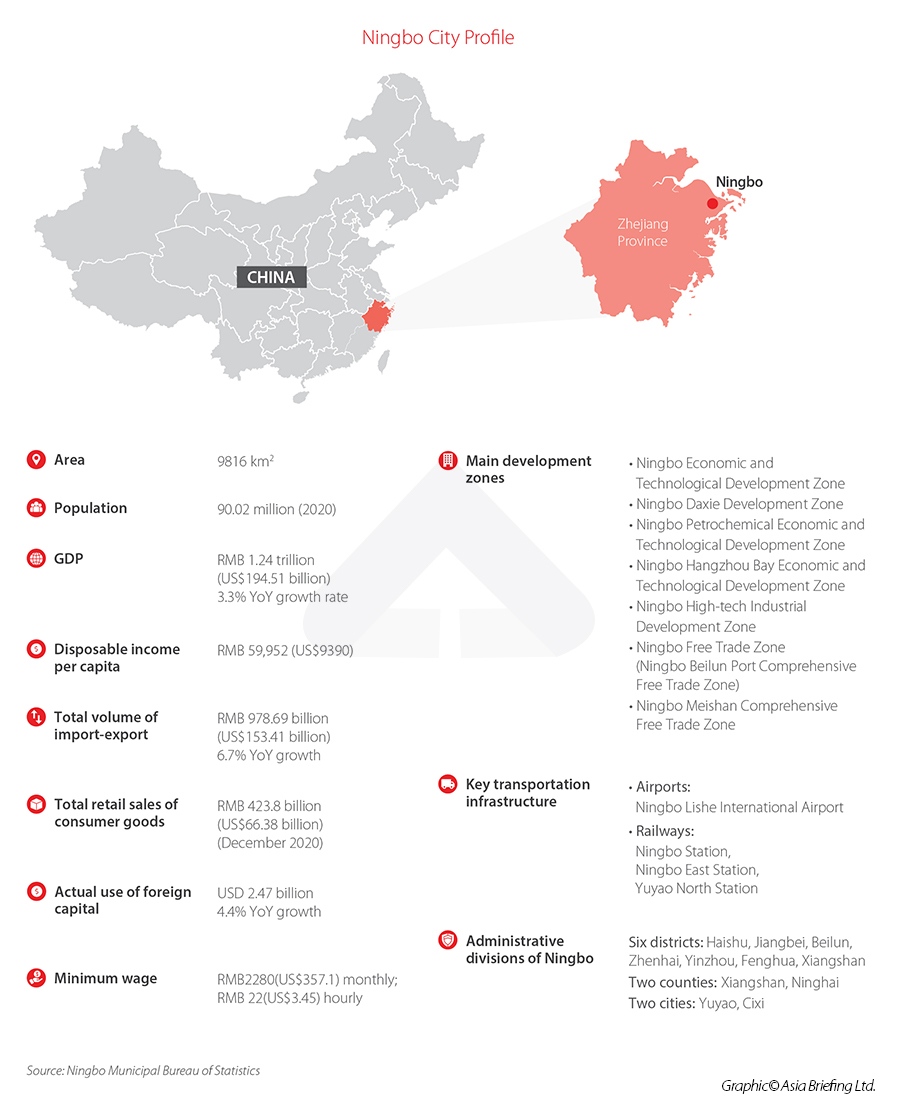
Ningbo Map, Fact Sheet

Ningbo’s economic profile

According to the Ningbo Bureau of Statistics and the National Bureau of Statistics of the People’s Republic of China’s preliminary calculation, Ningbo achieved a regional gross domestic product (GDP) of RMB 1,240.87 billion (approx.US$194.51 billion) in 2020, representing a 3.3 percent increase from 2019. The overall recovery is better than the national and provincial level; out of China’s 300 cities – Ningbo ranked 12th.

Ningbo GDP 2016 to 2020

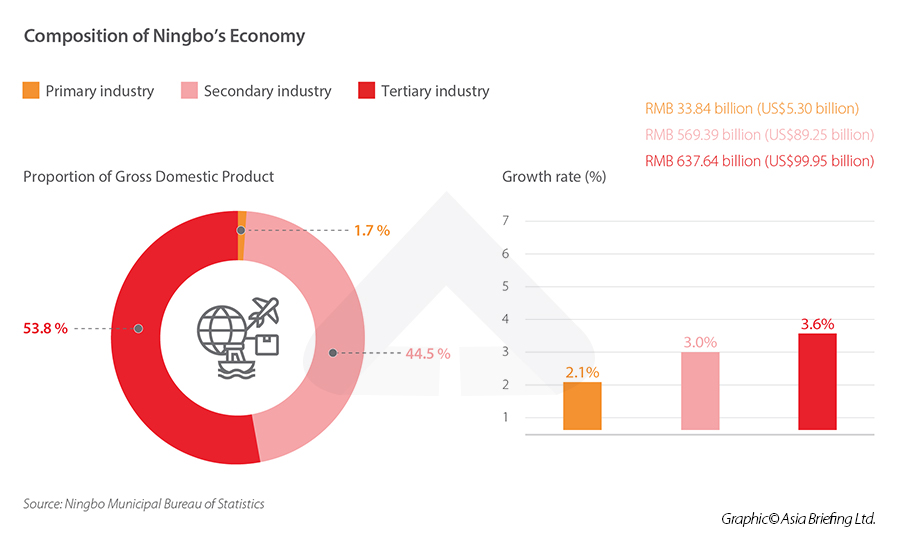
Based on the industrial structure in 2020, the added value of the primary industry was RMB 33.84 billion (approx.US$5.30 billion), up 2.1 percent. The secondary industry of the economy was RMB 569.39 billion (approx.US$89.25 billion), up 3.0 percent. The tertiary sector of the economy was RMB 637.64 billion (approx.US$99.95 billion), up 3.6 percent.

The contribution of the primary, secondary, and tertiary industries to GDP growth were 1.7 percent, 44.5 percent, and 53.8 percent, respectively.
Ningbo economy

Foreign trade and investment landscape

In 2020, Ningbo’s foreign trade situation gradually recovered from the COVID-19 pandemic. The volume of trade in goods totaled RMB 978.69 billion (approx.US$153.41 billion), an increase of 6.7 percent. Exports amounted to RMB 640.70 billion (approx.US$100.43 billion), up 7.3 percent and imports RMB 337.99 billion (approx.US$52.98 billion), up 5.6 percent. Mechanical and electrical products accounted for 55.1 percent of the city’s total exports.

In terms of trade partners, there are 224 countries and regions that directly trade with Ningbo, among which the import and export volume to the US, EU and ASEAN reached RMB 173.53 billion (approx.US$27.17 billion), RMB 170.78 billion (approx.US$28.00 billion) and RMB 107.95 billion (approx.US$16.91 billion) in 2020, up 22.0 percent, 7.2 percent, and 10.5 percent, respectively. Ningbo’s imports and exports to 65 countries along the “Belt and Road” amounted to RMB 276.42 billion (approx.US$43.33 billion), up 4.9 percent, including RMB 29.52 billion (approx.US$4.63 billion) to 17 countries in Central and Eastern Europe, up 3.7 percent from 2019 to 2020.

Ningbo attracted 486 foreign-invested projects worth US$4.70 billion by the end of 2020. The city’s actual use of foreign investment stood at US$2.47 billion, up 4.4 percent. Of this total, 411 new projects were approved by the tertiary sector, representing an increase of 19.0 percent in the actual utilization of foreign capital of US$1.35 billion.

Investing in Ningbo: High level transition to industrial internet industry, modern services

Industrial internet industry

Ningbo has a strong advanced manufacturing industrial cluster. In 2020, the added value of the manufacturing industry in the city reached nearly RMB 569.39 billion (approx.US$89.25 billion), accounting for 44.5 percent of GDP.

There are more than 120,000 manufacturing enterprises, including in textile, garments, home electric appliances, plastic machines, auto parts, stationery, and mold. Since most enterprises engage in traditional manufacturing, their upgradation involves the industrial internet industry, for example, through automation. This will help local manufacturing entities improve efficiency, move operations up the industrial value chain, and expand the region’s overall production capacity.

Ningbo aims to speed up the deployment of industrial-level internet platforms for its enterprises manufacturing high-end equipment, auto parts, textiles and clothing, intelligent home appliances, etc.

Enterprises in the region are also actively researching and developing chips for industrial computing, strengthening intelligent equipment, such as complete sets of automation; nurturing and developing industries, such as intelligent sensors; and developing low-level hardware and basic cloud platforms.

Modern services

Since the 13th five-year plan, Ningbo has prioritized the development of the services sector as an essential way to speed up economic transformation. Consequently, the services sector surpassed the local manufacturing sector for the first time in 2019, accounting for 49.1 percent of GDP. By 2020, the city’s service industries’ added value was projected to account for 53.8 percent of the city’s GDP. The services sector is now a driver of local economic growth and the main source of Ningbo’s tax revenue.

Ningbo’s tertiary / services sector structure has been optimized, and breakthroughs have been made in finance, commerce, science and technology, and information services industries; the proportion of producer services in the tertiary sector has risen to about 60 percent.

A key tertiary industry in Ningbo is trade service, whose growth has accelerated in recent years. The import and export volume of trade in goods in Ningbo accounted for 3.04 percent of China’s total trade in goods in 2020, ranking sixth among all Chinese cities. The import value of cross-border e-commerce online shopping has been ranked first in the country for three consecutive years. These demonstrated the efficiency and appeal of Ningbo’s trade services. Investors interested in Ningbo should pay attention to opportunities in this area.

Where to set up in Ningbo

Economic and Technological Development Zone

Founded in 1984, with a total area of 29.6 square kilometers, Economic and Technological Development Zones in Ningbo are among China’s earliest and largest national development zones.

Relying on the advantages of ports and their development linkages, the Economic and Technological Development Zones of Ningbo (Beilun District) has formed a port-adjacent industrial cluster with the automobile, equipment, petrochemical, steel, and energy as its focus. After more than 35 years of development, integrated circuits, high-end equipment, new materials, etc. are other emerging industries.

The Economic and Technological Development Zone host a large number of frontier enterprises, such as Geely, Shenzhou, and Haitian. There are 784 industrial enterprises located here, out of which 11 enterprises have an output value exceeding RMB 10 billion (approx.US$1.57 billion), 58 enterprises have an output value exceeding RMB 1 billion (approx.US$0.16 billion), and 18 companies are listed at home and abroad.

Ningbo Daxie Development Zone

Established in 1993, Ningbo Daxie Development Zone benefits from the state-level economic and technological development zone policy. Through 27 years of development and construction, Daxie has come to focus on port development, green petrochemical, and new chemical materials industries.

As a modern port area, the Daxie Development Zone ranks among China’s top 10 comprehensive port areas. The world’s largest 450,000-ton crude oil terminal is here, accounting for 21 percent of the total number of berths in Ningbo. The zone is thus well poised to develop the green petrochemicals industry. It aims to become an international energy trade center and a leader of energy reform in China.

Ningbo Bonded Zone (Ningbo Beilun port comprehensive bonded zone)

Established in 1992, Ningbo Bonded Zone is the earliest bonded area in Zhejiang province. Later in 2002, the State Council approved the establishment of Zhejiang Ningbo Export Processing Zone in Ningbo Bonded Zone, which is the second batch of export processing zones in China. On April 27, 2020, the State Council approved the transformation and upgrading of the original area of Ningbo Export Processing Zone to Ningbo Beilun Port Comprehensive Bonded Zone. In September 2020, Ningbo Beilun Port Comprehensive Bonded Zone was included in the scope of Zhejiang Free Trade Zone (Ningbo Area). At present, the zone accounts for nearly 10,000 enterprises of various types; in 2020, the region’s total production value was RMB 20.18 billion (approx.US$3.16 billion), an increase of 6.6 percent.

After more than 20 years of development, the area has focused on four functional industries – international trade, processing and manufacturing, bonded logistics, and digital. In the area of international trade, it has gathered more than 3,500 international trading enterprises. There are platforms for cross-border import e-commerce bases, imported goods markets, imported goods direct sales centers, and Central and Eastern European Specialty Products Perennial Exhibitions. In processing and manufacturing, focus is on the development of the electronic information industry and strategic emerging industries. In bonded logistics and digital, the zone has gathered more than 330 warehousing logistics enterprises. In recent years, the Ningbo Beilun port comprehensive bonded zone has accelerated digitalization of logistics, developed intelligent logistics, and promoted cloud warehouses’ construction.

City-wide incentive policies

To encourage overseas investors to invest locally, Ningbo City implements various incentive policies for foreign investment projects that meet certain industry requirements.

  • Promote overseas investors’ direct investment with distributed profits: Qualified non-resident enterprises can defer withholding income tax payment as long as they reinvest equity investment incomes, such as dividends and bonuses derived from resident enterprises directly into projects and sectors not prohibited by the country.
  • Ensuring land supply for major foreign-funded projects: Foreign-funded projects will be given priority in land application.
  • Promote fair competition between domestic and foreign-funded enterprises: Foreign-invested enterprises can fully enjoy various industrial support policies and participate in government procurement bidding fairly.
  • Innovative capital management of foreign-invested enterprises: Allow qualified foreign-invested enterprises to borrow funds in domestic and foreign currencies from abroad. Foreign investors can freely remit their investment income in RMB or foreign exchange in accordance with the law.
  • Expand financing channels for foreign-invested companies: Encourage foreign-invested companies to go public, list on the New Third Board and Ningbo Equity Exchange Center, support the use of non-financial corporate debt financing instruments for financing.
  • Optimize the foreign investment management system: Actively promote the “Internet + government services”, simplify the management procedures of foreign investment projects, and shorten the registration time for foreign investment enterprises.
  • Optimize the environment for overseas talents: Overseas talents can enjoy a series of preferential policies in visa and work permits application and can get access to all other kinds of social welfare.
  • Improve the business environment for foreign investment: Ningbo government promises to help foreign invested enterprises solve issues met in business operation and employee management in a timely manner.

Sunday, June 2, 2019

Aiming to lure top talent to take on the world

Ningbo is accelerating its globalization to attract global experts, with a focus on high-tech professionals, to upgrade local manufacturing industries.
Zhejiang Eagle Kedi Dili Technology Co Ltd, a testing equipment manufacturer in Beilun District, is a beneficiary of the city’s efforts in developing a global talent pool.
It now has four Italian engineers who have helped the company improve quality and break the foreign monopoly.
“The Italian engineers helped us become the first company in China to produce testing equipment for the engines of warplanes,” said Michael Chen, chief operating officer.
“In the past, this equipment had to be imported.”
An Italian engineer of Zhejiang Eagle Kedi Dili Technology tests the size and geometric tolerance of a mobile phone.
Chen signed a contract with Italy’s Gexcel Co to co-develop about 10 new types of testing equipment using Gexcel’s latest technology during the first China (Ningbo) Global Experts Summit held last month in Beilun.
The three-day “Connecting the Belt and Road, sharing global expertise” summit attracted 430 experts from 20 countries, including the US, Russia, Germany, Italy and Japan.
A total of 33 contracts were signed between Ningbo and foreign companies and institutions to boost cooperation in aerospace, integrated circuits, chemicals, bioengineering, pharmaceuticals and smart manufacturing.
“Ningbo is the first city to pilot the ‘Made in China 2025’ Initiative and is a pioneer of the ‘Belt and Road’ Initiative,” said Zheng Shanjie, Party secretary of Ningbo.
“We hope to attract more foreign experts to start up their business in Ningbo to share the huge dividend brought by the city’s development.”
It is of mutual interest as Ningbo needs high-tech professionals to upgrade local industries as well as their innovation to drive economic growth, and foreign experts demand a fast-developing market that abounds in manufacturing resources to grow their business.
The city had implemented a policy of subsidizing the employment of foreign experts and established platforms to connect local enterprises with foreign talent and companies.
A total of 33 contracts are signed between Ningbo and foreign companies and institutions during the first China (Ningbo) Global Experts Summit held in Beilun District.

Upgrading industries

Aiming to be competitive in the international market, Ningbo is attracting foreign experts to boost local technology innovation and help manufacturers improve quality and management.
The Ningbo Human Resources and Social Security Bureau said foreign experts in Ningbo had added 4,530 patents for local companies, developed 2,207 products previously only imported and helped increase revenue by 30.6 billion yuan (US$4.9 billion) from 2009 to 2016.
The experts used their accumulated experience to make internationally competitive local products.
“Italian engineers used their technology to improve our equipment’s precision by 30 percent and then our products now meet international standards and can be sold globally,” said Chen.
Hailun Pianos is the only listed instrument maker in the city and its pianos are exported to Europe, Japan and America thanks to the contribution of foreign experts from the US, France and Austria, who helped the company grow from a small factory producing piano parts to an internationally-renowned piano manufacturing brand.
“China has only about 60 years’ history of piano manufacturing but that in Europe can be dated back to 300 years ago. If we want to make world-leading pianos, the most effective way is to hire top-notch professionals to realize our dream,” said Chen Hailun, chairman of Hailun Pianos.
Peter Veletzky from Austria, a technical consultant of Hailun Pianos, tunes the instrument.
Ningbo Veken Screens Co Ltd is one of the most professional silk screen manufacturers in China. It has employed technical directors and production managers from Japan, up to seven people since 2008, at its factory in Beilun District.
Japanese-style management, emphasizing hygiene, safety and energy-saving, was applied to improve the production environment.
“Our production of screens requires a dust-free plant and the Japanese experts carefully set out each detail, such as requiring workers to wear clean clothes and shoes before entering the workshop,” said Lu Chunhong, director of human resources of Ningbo Veken.
The foreign experts also set up uniform maintenance procedures, including recording why a machine broke down, which parts were replaced and how the problem was resolved.
This allows them to focus regular checks and head off problems before they happen.

Attractive market

As a fast developing city on the east coast of China, Ningbo is a magnet for foreign experts to start or grow businesses in emerging fields such as big data and local industries highlighted by textile manufacturing.
The city also offers subsidies and platforms to connect companies with the resources they need.
According to the Ningbo Statistics Bureau, Ningbo’s GDP reached 984.69 billion yuan in 2017, up 7.8 percent from a year earlier, and the added value of the industrial sector — one of the biggest sectors of the local economy — increased by 9.6 percent year on year to 326.67 billion yuan.
“Ningbo was one of the earliest Chinese cities to open to foreign companies. It has an advantageous location and a good private economy,” said Xia Mingjiu, deputy director of the State Administration of Foreign Experts Affairs.
As a promising market, the city in foreign experts’ eyes is also full of opportunities to develop their business.
“Ningbo is the biggest center of textile manufacturing in China and we want to find a fabric company as our partner to apply our nano-coating technology into clothes, which can make clothes resistant to harmful bacteria and virus for people to use in hospitals,” said Shay Hershcovich, director of business development department of Nano Textile, a technology company based in Israel.
Jaspal Peter Sahota is a scientist with Inavya Ventures Ltd of the UK, which developed a software for mobile phones that can connect health monitors with physicians, allowing them to apply big data technology to analyzing the dynamic data of patients’ health so that potential diseases can be prevented.
“I’m looking for investors and manufacturers of health monitors here in Ningbo to apply our technology into people’s daily life as China is making lots of efforts in improving people’s health,” said Sahota.
In addition, the city has issued policies to financially support local companies to employ foreign experts and also established service platforms to make it convenient for Ningbo’s enterprises to connect foreign companies and talent.
The Ningbo Human Resources and Social Security Bureau said the city invested 370 million yuan between 2009 and 2016 in subsidizing local companies to attract 1,486 foreign experts in total.
Companies that employ one foreign engineer for over one year can receive up to 600,000 yuan as a subsidy from the government and the transportation and accommodation cost of bringing in foreign experts to share their knowledge and experience in Ningbo can also be covered by the government.
For finding suitable foreign experts, there is also a platform for connecting with foreign talent.
CSMT Center, an Italy-based technological service center, established a branch three years ago in Beilun District with the help of Ningbo Ximeng Industrial Technology Development Co Ltd as a platform to promote Sino-Italian cooperation in technology.
“One of the reasons for us to promote this cooperation is that Italian companies also want partners in China to apply their technological innovation to markets,” said Trichilo Riccardo, president of CSMT Center.
The branch, with a talent pool of 2,000 Italian experts, introduced Italian technology and engineers into Chinese companies.
“Our four Italian engineers were recommended by CSMT and the latest cooperation with Italy Gexcel Co was also helped by CSMT,” said Chen of Zhejiang Eagle Kedi Dili.


Ningbo Foreign Investment Environment,Set Up Business,Corporate Formation,Company Registration In Ningbo China

Image result for ningbo
Ningbo is a coastal city and second largest city within Zhejiang Province. Based on the Reform and Opening Up Policy 1978, Ningbo became one of the first coastal cities to be opened to foreign trade in East China. Ningbo's vibrant economy has grown significantly owing to its various manufacturing industries as well as abundant natural resources in the surrounding coastal areas.  
1471577545207037113.jpg

General
  • Population: 5,780,000
Economy
  • Primary industry (percentage of GDP): RMB 26,850 million (4.1 percent)
  • Secondary industry (percentage of GDP): RMB 351,680 million (53.4 percent)
  • Tertiary industry (percentage of GDP): RMB 279,690 million (42.5 percent)
  • Total: RMB 658,220 million
  • Total retail sales of consumer goods: RMB 232,925,900 million
  • Total value of imports and exports: USD 96,572,690 million
Source: China 2013 Statistical Yearbook (uses 2012 statistics)
Business
  • Minimum monthly wage: RMB 1,470
  • Minimum hourly wage: RMB 12
  • Avg. annual wage of staff and workers: RMB 43,308
Sources: Local Labor Bureau and Social Insurance Bureau (2013)

Ningbo is only 160 kilometers south of Shanghai, but it has suffered for more than a century from the fact that Hangzhou Bay stands between it and Shanghai. However, unlike Shanghai, Ningbo has a deep-water port and is rapidly taking advantage of the newly-opened Hangzhou Bay Bridge as an increased regional transport route directly to Shanghai.
Roads
The 36-kilometer long Hangzhou Bay Bridge opened to traffic in May 2008, and stretches across Hangzhou Bay to Shanghai, reducing driving time from four to two hours. The construction of two bridges connecting the Zhoushan Archipelago off Ningbo to the mainland was completed in 2008. One of these bridges, the 5.3 kilometer long Xihoumen bridge, is the second largest suspension bridge in the world after the Pearl Bridge in Japan. It links the Jintang and Cezi islands and allows the passage of ships weighing up to 30,000 tons. The Jintang Bridge, linking Jintang Island and Zhenhai at Ningbo, is 27 kilometers long and enables the passage of ships weighing up to 50,000 tons. The two bridges represent the second phase of a huge continent-island joint project, launched by Zhoushan in 1999, to link the Zhoushan Archipelago with the mainland via five bridges. Construction of the other three bridges has now been completed. The bridges shorten the journey from two hours to half an hour. 
Railways
The journey from Ningbo to Shanghai takes approximately three to four hours by rail and there are close connections to other major cities in China. There are two railway stations in the city, one in the north that handles freight and one in the south for passengers.
Air
Lishe Airport operates more than 40 domestic routes as well as international flights to foreign capitals such as Singapore, Bangkok and Seoul.
Ports & Waterways
Beilun Port is ideally located in the middle of the coastline of mainland China. The port is situated at the confluence of the north-south shipping line and the golden waterway of the Yangtze River. The Port of Ningbo has the largest number of deepwater berths in China. The Port of Ningbo is China's major transfer and storage base for containers, iron ore, crude oil and liquid chemicals. It also acts as a transfer base for coal, grains and bulk cargo in Eastern China. In 2011, Ningbo Port cargo throughput reached 433 million tons, ranking third domestically and sixth worldwide[1]. All of the top 20 global shipping companies have established offices in Ningbo Port.
City Infrastructure
In recent years the quality of the environment in Ningbo’s city center has greatly improved. The Ningbo metro system is expected to open in 2015.
The 12th Five-Year Plan (2011-2016) of Zhejiang province defines Ningbo as the “economic center of South Yangtze River Delta”. Government goals for the city include transforming it into a major base of advanced manufacturing, modern logistics, energy, and raw materials, as well as a center for shipping finance. The latter goal is based on Ningbo’s excellent natural deepwater port, unique among nearby cities.
Ningbo is a city that enjoys the same rights of economic management as a provincial government would. In 2012, Ningbo’s GDP reached RMB 652.47 billion and the GDP per capita was RMB 85,413. In 2012, the tertiary industry accounted for 42 percent compared to 20 percent in 2002. The tertiary industry in Ningbo is set to become a new engine for the city. Between January and November 2012, 391 foreign-funded projects were approved in Ningbo. Total investment amounted to USD 9.156 billion, representing a year-on-year increase of 7.1 percent[1].
Ningbo is an important industrial base and a major production base of grain, cotton, edible oil, and aquatic products. Industries include textiles, garments, machinery, petrochemicals, iron, steel, power generation and papermaking. Overall, the city has over 115,000 private enterprises. It is also considered to be the capital of stationery in China, with more than 800 companies producing one-third of China’s exported stationary products.
Ningbo has the capacity to refine 12 million tons of crude oil. It is also the largest injection molding machine production base in China, with around 50 enterprises accounting for 50 percent of the country’s annual production. The electronic industry is booming too, with more than 2,000 such companies registered in Ningbo. Ningbo Cixi is one of the three major home electrical appliance production bases in China – the turnover accounts for 30 percent of China’s total in this industry. With more than 3,000 factories in Ningbo, the city is a leading garment manufacturing city and has become the largest garment manufacturing base in China, accounting for 13 percent of the country’s total production.
There were 13,336 foreign-invested enterprises in Ningbo at the end of 2010. The scale of investment averaged USD 10.45 billion in 2010, which was up 130 percent year-on-year. Out of these enterprises, ten were valued at over USD 50 million, most of which were in the property sector[2].
Contrary to popular belief, the main focus of industrial development in Ningbo is not in the old city itself, but in Beilun City, which lies 27 kilometers to the east. This bustling city, which is about 45-60 minutes away from Ningbo, has expanded in recent years around the port and three major development zones – Ningbo Economic and Technological Development Zone, Ningbo Free Trade Zone, and Daxie Development Zone.
Beilun Port
Beilun Port is an ideal place for developing ocean-going transport to North and South America and Oceania. It has already built trade and transport relations with over 600 ports from more than 100 countries and regions in the world, and more than 100 inland Chinese ports. The business scope includes imported iron ore, containers, crude and finished oil, liquid chemical products, coal, and the loading/offloading, storage, and transshipment of other bulk goods.
On Daxie Island next to Beilun, there are 40 deepwater berths including three 100,000-ton capacity berths and one 70,000-ton berth, with an annual capacity of 2.5 million TEUs. Operations began in 2006, with a total investment of RMB 3.454 billion being provided by CITIC, the investment arm of the central government. With a growth rate of 13.6 percent year-on-year, the GDP of Ningbo Daxie Development Zone reached RMB 14.5 billion in 2010. In addition, on Jintang Island (part of the Zhoushan Archipelago just off Ningbo), new container facilities and 5 new container terminals with an annual handling capacity of 14.3 million TEUs are being built, with support from COSCO and other investors. As of March 2013, Ningbo has 230 shipping liners running up to 1,700 sailings through its port per month.
Ningbo Economic and Technical Development Zone
Ningbo Economic and Technical Development Zone (NETD) is among one of China’s earliest and largest national-level development zones. It was established in October 1984, and covers an area of 29.6 square kilometers. In 2012, 47 new foreign-funded enterprises were approved in the zone with a total investment accumulating to USD 2.070 billion. The contracted FDI amounted to USD 980 million and the actually utilized FDI reached USD 730 million in the same year. Around 38 percent of the zone’s FDI comes from Hong Kong, 13 percent from Japan, 18 percent from Taiwan, and 18 percent from other South East Asian Countries. The United States and EU account for a 9 percent share each. Many multinational companies, including Esso, Samsonite and BP, have chosen NETD to conduct business in.
Ningbo Free Trade Zone:
Established in 1992 and covering 2.3 square kilometers, this zone has several functions including export processing, international trade, bonded logistics, and commodity exhibition. In June 2002, the Ningbo Export Processing Zone (NEPZ) was added, covering a further three square kilometers. With special preferential policies, the NFTZ and NEPZ operate together “inside the territory, outside the customs”. In addition, the zone houses one of the new Bonded Logistics Parks. Currently, more than 6600 companies from about 60 countries have invested in the zone[1]. In 2012, 10 new foreign-funded enterprises were approved in NFTZ with total investment accumulating to USD 365 million. In 2012 the contracted FDI amounted to USD 141 million and actually utilized FDI reached USD 104 million.

To facilitate people who want to invest and set up business in Ningbo,here is an introduction of Types of business presence in China: 

Before starting up a business in China, you have to know what are the options. Foreign Investors generally establish a business presence in China in one of five modes: Wholly Foreign Owned Enterprise (WFOE); Representative Office; Foreign Invested Partnership Enterprises (FIPE); Joint Venture and Hong Kong Holding Company.

Wholly Foreign Owned Enterprise (WFOE) is a Limited liability company wholly owned by the foreign investor. WFOE requires no registered capital and it's liability of equity , can generate income, pay tax in China and it's profit could be repatriate back to investor's home country. Any enterprise in China which is 100 percent owned by a foreign company or companies can be called as WFOE.

Representative Office(RO) is a Liaison Office of it's parent company. It requires no registered capital. It's activities would be: product or service promotion, market research of it's parent company's business, Quality Control liaison office etc in China. RO generally is prohibited to generate any revenue nor generating contracts with local businesses in China.

Joint Venture (JV) is a Limited liability company formed between Chinese investor and Foreign investor. The parties agree to create a entity by both contributing equity, and they then share in the revenues, expenses, and control of the enterprise. JV usually been used by foreign investor to engage the so called restricted in areas such like: Education, Mining, Hospital etc.

Since March 1, 2010: Measures of Establishmentof Foreign Invested Partnership Enterprises (FIPE) in China is taking effect. The regulation, which take effect since March 1, 2010, are known as the Administrative Measures for the Establishment of Partnership Enterprise in China by Foreign Enterprises or Individuals. There's no required minimum registered capital for a Foreign Invested Partnership Enterprise (FIPE) in Ningbo , Beijing, Ningbo , Shenzhen, Hangzhou and rest cities of China

Hong Kong Company usually been used as a Special Purpose vehicle (SPV) to invest Mainland China. Hong Kong is one of the quickest locations to Incorporate a business. Although a HK company is not a legal entity in Mainland China (Mainland China and Hong Kong, See Wiki 1 country, 2 systems), lots foreign investors, especially investors from Europe and North America still chose to setting up a Hong Kong company as SPV to invest China.

After China's entry to WTO, most industries in China welcome foreign investment, WFOE setting up in China becomes the first option of foreign investment's entity structures instead of Rep.Office setting up in China. At the mean time, for tax purpose, effective licensing system etc more and more investors use Hong Kong as the holding company to invest China mainland, using this offshore company to hold their operations in China.

Business set-up in Ningbo  is a big project by itself, which requires financial and time commitments, business management knowledge and China expertise. Identifying a competent agent to manage the complex process will be a cost and time effective way to avoid potential pitfalls . Tommy China Business Consulting has direct connections in the local government

Since 2006, TCBC has been focusing on consulting services for our clients to invest in Ningbo China. We are specialized in establishment of wholly foreign owned enterprises (WFOEs), setting up of offshore companies, trading services, tax minimization, Assist in obtaining government approvals and certificates for running business,negotiate and draft various legal documents provide legal advice, negotiate government officer for Land acquisition. Advising on formation of WOFE and business structures, managing and controlling WOFE in Ningbo  China, drafting privacy policies and structuring commercial transactions

TCBC will manage all aspects of incorporation to get you a business license in Ningbo China. We offer a range of company formation services including helping you to set up:
-Wholly Foreign Owned Enterprises (WFOE )
-Joint Ventures (Equity/Co-operative)
-Foreign Invested Partnership Enterprises (FIPE)


Contact Tom Lee for business registration in Ningbo now.